
Racing thoughts and a forgetful week after sustained pressure are what stress and the brain look like from the inside: the amygdala may take over, cortisol rises, and memory, mood and anxiety are affected when stress persists.
Quick answer: The brain runs the stress response. The amygdala flags danger, the hypothalamic–pituitary–adrenal (HPA) axis releases cortisol, and the autonomic nervous system changes the body’s state. Chronic stress is where lasting change becomes possible. Control, routine and predictability are the habits Harvard Health highlights for softening it.
This guide is the map for the whole topic. Each section ends with a route into a deeper explanation, including amygdala and stress and cortisol and the brain.
Choose your route through the topic
Readers arrive with different problems, so the routes below follow what you notice rather than anatomy. Pick the closest match and read its steps in order. The anatomy sections after it explain why each route makes sense.

- You feel wired, jumpy or stuck. Begin with the fight or flight response. Move on to the freeze response if the reaction is closer to shutting down than to speeding up. Then read the guide that asks why do i feel on edge all the time if the feeling never fully lifts.
- Your thinking feels slow or scattered. Start with stress brain fog. Then return to the hippocampus section below, which covers how cortisol touches memory.
- Your body is doing things you did not ask for. Begin with the physical symptoms of stress. Then read the autonomic nervous system section below to see which branch is responsible.
- You are worried about long-term effects. Read the chronic stress section below first. Follow it with the detailed guide to the effects of chronic stress on the brain. If a single event rather than a long stretch is the cause, read how does trauma affect the brain.
Every route ends in the same place: a small number of habits matched to the system involved. Those are collected in the habits section further down.
The brain is the organ in charge
A peer-reviewed review in the NIH-hosted PubMed Central archive describes the brain as the central organ of stress and of adaptation to stress. That framing matters for how you read everything else. The heart rate, the hormones and the gut reactions are outputs. The brain decides what counts as a threat and coordinates the systems that respond.
The same review lists those systems: the HPA axis, the sympathetic and parasympathetic branches of the autonomic nervous system, the immune system and metabolic hormones. Allostasis is its term for achieving stability through activation of these systems. In plain terms, a stress response is the body adapting, not malfunctioning. Trouble starts when the adaptation is prolonged or out of balance.
The review also states that the adult and developing brain show structural and functional plasticity in response to stressful and other experiences. That has two practical consequences. It means stress can leave marks, and it means those marks are not fixed by definition. Both ideas return in the chronic stress section.
For most readers the useful first move is to stop treating stress as one thing. It is a set of cooperating systems, each with its own entry point. The sections that follow take them one at a time: first the brain regions, then the hormone axis, then the nerves that act on the body.
Brain regions in the stress response
Three structures come up repeatedly in stress research: the amygdala, the prefrontal cortex and the hippocampus. The table sets out what the cited evidence says about each and what that means when you plan your day.
| Region | What the evidence says | Planning use |
|---|---|---|
| Amygdala | Governs survival instincts and may take over in dangerous situations | Expect instinct to outrun reasoning in the moment, so shape the situation beforehand |
| Prefrontal cortex | In animals under prolonged stress, activity falls in these regions while amygdala activity rises | Protect the conditions that support deliberate decisions; treat the animal data as a direction, not a human measurement |
| Hippocampus | Cortisol can impair memory signals in the hippocampus as a whole, yet increase connectivity inside the portion studied | Do not rely on memory alone when stress is high, and do not assume stress always weakens memory |
These points come from Harvard Health’s overview of protecting your brain from stress and a Yale School of Medicine report on a cortisol memory study.
Amygdala: the alarm
The amygdala is the part of the brain that governs survival instincts, and Harvard Health notes it may take over in dangerous situations. That single idea explains a lot of everyday frustration. When the amygdala is in charge, knowing what you should do and doing it come apart. The reaction arrives first and the reasoning, if it arrives at all, comes later.
The sensible conclusion is not that you should fight your amygdala in the middle of an argument or a deadline. It is that the best leverage comes before and after the spike. You can change how often threats arrive unannounced, and you can change what you do once the alarm has fired. Both are covered in the habits section. The structure itself has its own guide at amygdala and stress.
Prefrontal cortex: the planner under pressure
Harvard Health reports that animals under prolonged stress show less activity in prefrontal regions and more in the amygdala. In effect, the balance tips away from the parts of the brain involved in deliberate thought and toward the part that handles survival. This is animal evidence, so it supports a direction of travel rather than a figure for any person.
Harvard Health also states that stress affects not only memory but other brain functions such as mood and anxiety, and that it promotes inflammation. Because mood and anxiety appear in that list, readers often ask where stress ends and anxiety begins. stress vs anxiety takes up that distinction directly.
If you notice that your planning, prioritising or judgement slips when you are stretched, this is the region and the pattern to keep in mind. The practical question is how to keep decisions from depending on your best thinking at your worst moment.
Hippocampus: memory under cortisol
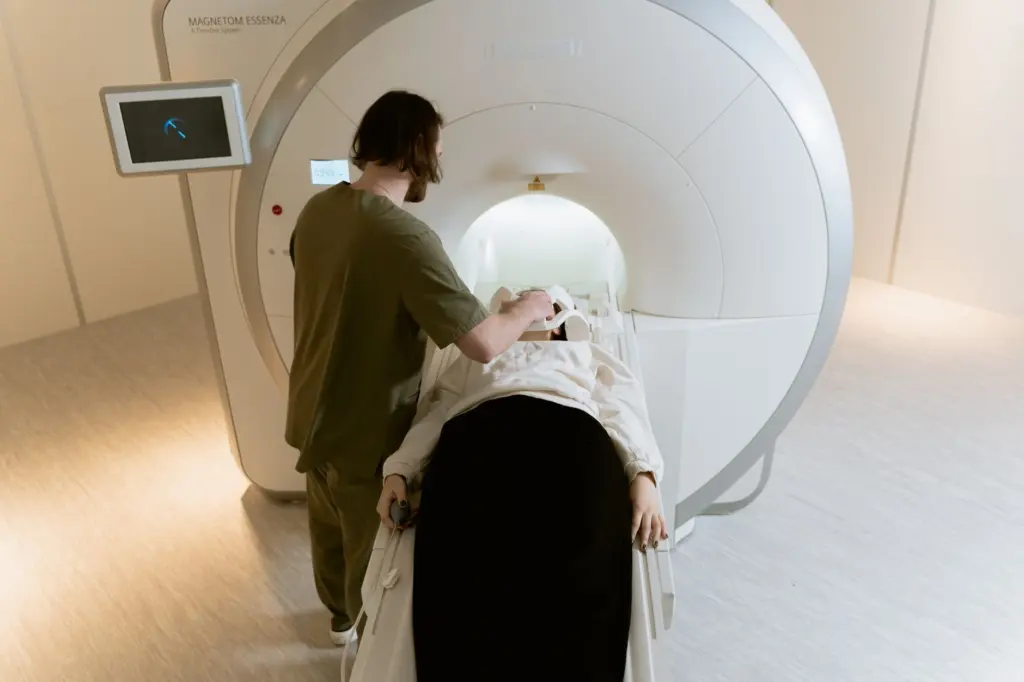
The hippocampus is where the cortisol story gets interesting. The Yale study was a double-blind, placebo-controlled fMRI experiment with 27 participants. It found that cortisol can impair memory signals in the hippocampus as a whole. It also found that cortisol increases connectivity inside the portion of the hippocampus the researchers examined. Participants remembered emotional object-and-scene pairs better under cortisol, and the Yale report quotes the researchers as saying we actually create stronger memories when we are under stress.
The honest reading is mixed. Stress hormones do not simply switch memory off. They can sharpen emotionally charged material while degrading memory signals more broadly. A small, controlled experiment shows what cortisol can do in specific conditions. It does not tell you how a given stressful month will affect your recall of everyday details.

For readers whose worry is forgetting appointments or losing words, the detail is in stress and hippocampus.
Cortisol and the HPA axis
What cortisol does in the body
Cortisol is a stress hormone released alongside adrenaline when the body senses a threat. A University of Florida physiology resource explains that stress triggers the release of these hormones, which prepare the body to respond. It is a secondary educational source, and it matches the Yale finding that cortisol also acts inside the brain, not only elsewhere in the body.
The short-term job is preparation. The problem is duration. The same resource states that chronic stress causes prolonged elevation of cortisol, over weeks or longer. A hormone that helps in a crisis becomes a different kind of signal when it never fully settles.
Cortisol is not only an emergency chemical. Its daily pattern is the subject of the cortisol awakening response guide. Two everyday substances prompt their own questions: does caffeine increase cortisol and does alcohol reduce stress. Each deserves a direct answer rather than a guess from this overview.
What the HPA axis is
The HPA axis is the hypothalamic–pituitary–adrenal axis. Its name lists the chain of structures involved: the hypothalamus in the brain, the pituitary gland and the adrenal glands. The PubMed Central review names it as one of the key systems that respond to stress, alongside the sympathetic and parasympathetic nervous systems, the immune system and metabolic hormones.
A useful way to hold the idea is to treat the HPA axis as the hormone arm of the stress response, the arm that ends in cortisol. The autonomic branches are separate arms that act on organs directly. The review’s concept of allostasis ties them together: stability achieved through the coordinated activation of all these systems, not through any one of them alone.
The practical reading is that no single habit addresses every system. A person who exercises faithfully but never finishes a stressful episode, or who breathes slowly but lives with constant unpredictable demands, is covering some arms and leaving others. The habits section matches the options to the systems.
The autonomic nervous system: the body’s side
The PubMed Central review states that the sympathetic and parasympathetic systems adapt the body during challenges. That sentence is the core of the autonomic story. One branch mobilises the body, the other restores it, and the balance between them shapes how stressed you feel physically. sympathetic vs parasympathetic nervous system lays out the pairing in more detail.

Adrenaline is the other hormone named in the University of Florida resource, and it is the one people notice. The adrenaline rush guide covers how the brain sets that sensation off.
Reading your own body’s signals
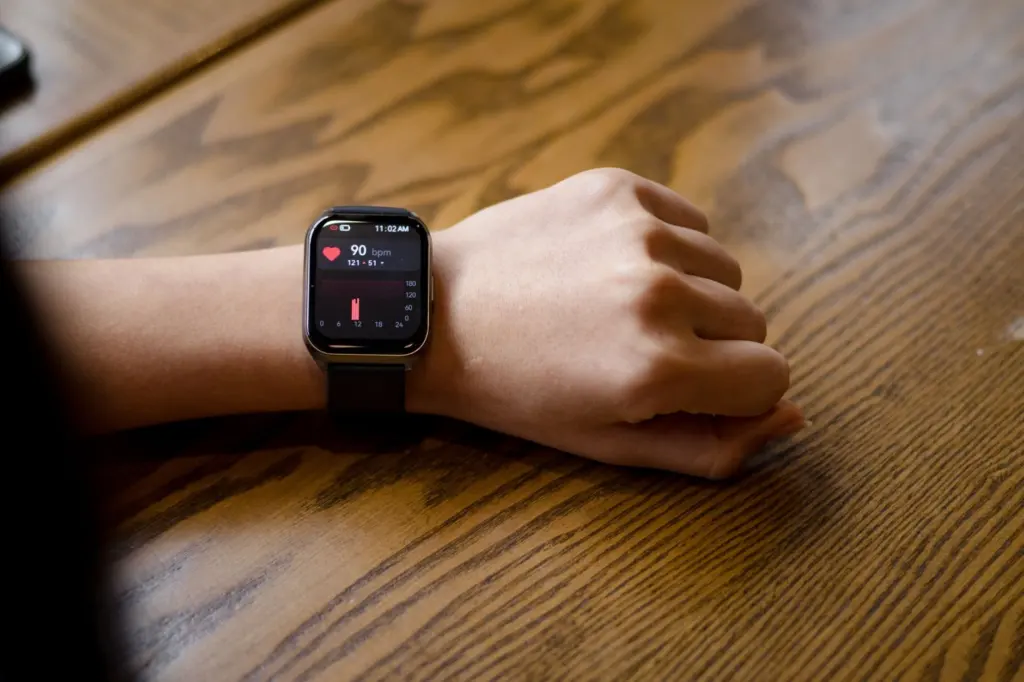
A pulse reading is the most accessible window into this system. A wearable heart monitor shows a measurable output of the sympathetic and parasympathetic balance, and trends over days tell you more than a single reading. heart rate variability and stress explains what that signal can and cannot show.
Blood pressure is another output worth understanding. The question why does stress raise blood pressure has its own explanation, so it does not need to be settled here.
The recovery side
Recovery depends on the parasympathetic branch, and the nerve most often linked with it is covered in vagus nerve and stress. Slow, seated breathing is a common starting habit for people who want to shift out of an alarm state. It costs nothing to try, and a wearable reading lets you check whether it changes your own numbers instead of taking that on trust.

Chronic stress and brain structure
Yes, chronic stress can change the brain, but the evidence cited here describes rewiring and shifting circuit balance rather than a simple, uniform shrinkage. Harvard Health states that chronic, persistent stress may actually rewire the brain. It adds that these changes may be reversible in some instances and harder to reverse in others.
The PubMed Central review supplies the structural vocabulary. It describes structural and functional plasticity in response to stressful and other experiences, and it says stress can cause an imbalance of neural circuitry supporting cognition, decision making, anxiety and mood. The University of Florida resource adds the hormonal backdrop: prolonged elevation of cortisol over weeks or longer. Taken together, the picture is a brain that adapts to what it is repeatedly asked to do. When the demand is constant threat, the adaptation favours alarm.
This is where readers most often overreach in both directions. It is a mistake to read this as proof that a hard year has permanently damaged your brain. It is equally a mistake to dismiss the evidence because it sounds alarming. The supported reading is that duration matters, that changes can depend on circumstances, and that reversibility is a real possibility but not a guarantee.
Two related ideas help organise the question. The contrast between short bursts and long stretches is the subject of acute vs chronic stress. The idea of cumulative wear is explained in what is allostatic load. If you are weighing how serious your own situation is, read both before drawing conclusions.
One decision rule follows from the evidence. If stress has been persistent and your mood, concentration or decision making have changed, treat that as a reason to change the conditions rather than wait for the brain to sort itself out. Because reversibility varies, earlier changes are the safer bet. That is a judgement drawn from Harvard Health’s account, not a figure about any individual.
Habits matched to each system
The evidence base for specific habits in this guide is narrower than the evidence for the biology, so the habits below are the best-supported ones plus the paths into the topics that have their own guides. Each is tied to the structure it most plausibly serves.
- Amygdala: make stress more predictable. Harvard Health states that if a person can anticipate stress, it is less damaging than stress that appears random. Warning yourself about known demands, putting them at fixed times and avoiding ambushes follow directly. For in-the-moment alarm, name it to tame it covers putting a label on the emotion.
- Prefrontal cortex: establish control and routine. The same Harvard Health overview advises establishing some control over your situation, and it lists routine as a help. A routine reduces the number of decisions you must make when your planning regions are least reliable.
- Hippocampus: back up your memory. Cortisol can impair memory signals in the hippocampus as a whole, so a sensible habit is to write down commitments and instructions during demanding stretches rather than trust recall. That is a reasoned inference from the Yale findings, not a tested protocol.
- HPA axis: finish the stress episode. Because the harm described above comes from prolonged cortisol elevation, the habit that matters is letting episodes end. how to complete the stress cycle addresses that.
- Autonomic nervous system: practise slow, deliberate downshifting. The relaxation response guide explains how the brain switches on the calming side of the system.
Movement, people and everyday pleasures
Several popular habits sit outside the brain-structure framework, and each has its own dedicated guide. Movement is the first: how does exercise reduce stress looks at it directly, and a walk along a wooded path is the simplest version. Connection is the second: how does social support reduce stress and do hugs reduce stress cover the social and physical side.
Sensory pleasures round out the list. does laughing reduce stress and does music reduce stress are separate questions that deserve separate answers. A good approach is to choose one habit from the matched list, run it for a few weeks and compare, rather than adopting everything at once. Changing several things together makes it impossible to tell what helped.
Stress effects beyond the brain
Stress does not stay in the head. Harvard Health notes that it promotes inflammation, and the PubMed Central review includes the immune system among the stress-responsive systems. The skin is a frequent place for this to show up, and can stress cause skin problems goes into that connection.
The decision point is the same as elsewhere. If bodily symptoms persist or worsen, they are a reason to speak to a health professional, not just to adjust habits. Habits address the stress pathway. They do not diagnose what a symptom is.
Frequently asked questions
| Question | Answer |
|---|---|
| How does stress affect the brain? | It shifts activity between regions, affecting memory, mood and anxiety, and in chronic cases may rewire circuits. |
| What does cortisol do in the body? | It is released with adrenaline to prepare the body for a threat, and it stays elevated when stress is chronic. |
| What is the HPA axis? | The hypothalamic–pituitary–adrenal axis is a key stress system, listed alongside the sympathetic and parasympathetic branches, the immune system and metabolic hormones. |
| Can chronic stress shrink parts of the brain? | The evidence describes rewiring and structural plasticity rather than a blanket shrinkage, and some changes may be reversible. |